The Omega Constellation has always been the "intellectual" choice in the brand’s catalog—a watch that leans into precision, symmetry, and a very specific kind of 1950s elegance. But let’s be honest: for years, it felt like the Seamaster and Speedmaster were getting all the high-performance upgrades while the Constellation remained a beautiful, if somewhat static, heritage piece. That changed the moment I saw the new Constellation Observatory Collection.

Walking through the details of this release, I realized Omega wasn't just doing another dial refresh. They’ve managed to solve a technical riddle that has persisted since the inception of the Master Chronometer certification: how do you certify a watch for extreme precision without a seconds hand?
When I first strapped on the new 36mm steel-on-steel model, the absence of a seconds hand was the first thing that struck me. In the world of horology, the "deadbeat" or sweeping seconds hand is usually the heartbeat of the watch. However, by removing it, Omega has leaned into a minimalist "two-hand" aesthetic that feels incredibly sophisticated. But here is the kicker—this is the first two-hand watch ever to receive METAS Master Chronometer certification. Usually, to prove a watch is running within the 0/+5 seconds per day requirement, you need that ticking hand for measurement. Omega’s solution involves a proprietary testing protocol that proves a watch doesn't need to "show" its pulse to have a perfect one.

The design language here is a love letter to the 1952 original. We see the return of the "Pie-Pan" dial, but it’s executed with a crispness that only modern CNC machining can achieve. The "claws" or griffes on the side of the case—originally designed to hold the crystal and gasket in place for water resistance—are now slimmed down, integrated so seamlessly that they feel like a natural extension of the lugs rather than an architectural afterthought.
One thing that sparked a lot of debate in the collector community—and something I tend to agree with—is the choice of the 36mm case size. Some vocal critics on forums argue that 36mm is "too small" for a modern sport-chic watch. I couldn't disagree more. On the wrist, the integrated bracelet and the slightly flared case shape make it wear much more like a 38mm. It hits that "sweet spot" of vintage proportions with modern heft.

The movement inside is the Calibre 8900 (or 8901 for the gold versions), visible through the sapphire case back. And this is where the "Observatory" name earns its keep. The medallion on the case back, featuring the eight stars over the Geneva Observatory, represents the eight METAS tests the watch passes. It’s a reminder that while this watch looks like it belongs at a black-tie gala, it is technically robust enough to withstand 15,000 gauss of magnetic interference.
I’ve noticed a lot of people comparing this to the Cartier Santos or the Datejust. While the comparisons are inevitable, the Constellation Observatory feels less like a status symbol and more like a "design object." The way the light catches the faceted indices and the brushed finish of the links feels more deliberate, less flashy.

For those who think the Constellation is "your grandfather's watch," this collection is a firm rebuttal. It’s a masterclass in how to strip away the noise—the date windows, the sweeping seconds, the bulky bezels—and focus entirely on the purity of chronometric performance. It’s quiet luxury, backed by the loudest technical credentials in the industry. Whether you’re a purist who demands METAS accuracy or an aestheticist who loves the 1950s silhouette, Omega has finally bridged that gap.
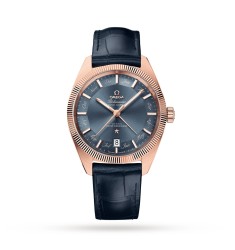
For replica watches, classic and simple styles are the most suitable to buy. They are easy to achieve and the easiest to make a 1:1 look. You can get a classic AAA replica Omega Constellation from x-watches.co for just $150 to match your shirt, which is great.
Comments
Post a Comment